Jun 12, 2024
 Mobile Development

Last updated: 23 September 2026.
Mobile app development usually moves through discovery, scoping, design, development, testing, launch and ongoing maintenance. Each stage should produce something the business can review. This guide explains the decisions and deliverables to agree when commissioning a custom mobile app, rather than treating development as a single build-and-launch task.
1. Ideation and Research
Start with the problem, the people affected and the result the app should enable. Interview users, review the current workflow and test assumptions with a prototype where useful. Bring examples of existing forms, spreadsheets or systems. The output should be a prioritised problem statement, key user journeys and a clear definition of what the first release needs to achieve.

2. Planning and Strategy
Turn the initial brief into an agreed scope: features, user roles, integrations, acceptance criteria, assumptions and exclusions. Confirm dependencies such as API access and client approvals before committing to dates. Our software scoping guide explains this preparation. Separate first-release requirements from later ideas so new requests can be assessed against time and budget.
3. Design
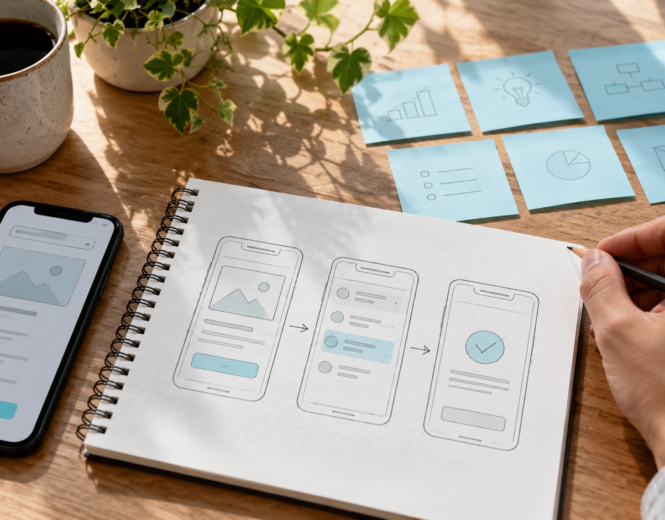
Map the main journeys with wireframes and, where useful, a clickable prototype. Review empty screens, error states, permissions and accessibility alongside the visual design. The client should confirm the workflow and supply approved brand assets and content. A prototype helps validate the experience; it is not a working production app or proof that integrations are complete.
4. Development
Build the agreed features and supporting systems in reviewable stages. This may include the app, backend, APIs and an administration portal. Choose between native development and Flutter for iOS and Android based on the requirements. Define which team owns each integration: GoReefers, for example, combines RocketSoft’s driver application with an existing backend maintained by the client’s team.
5. Testing
Check the app against the agreed acceptance criteria using representative devices, accounts and data. Include slow connections, failed payments or requests, permissions and recovery from errors where relevant. The client should test real business scenarios and record any issues before sign-off. Testing reduces risk; it cannot guarantee that software will never contain bugs.

6. Launch
Prepare the release build, store information, screenshots, support details and required privacy disclosures. Agree who controls the developer accounts and who responds to review questions. Apple and Google assess store submissions separately, so approval timing is not a guaranteed development milestone. Plan a controlled rollout and confirm that the backend, support process and monitoring are ready before inviting users.
7. Maintenance and Updates
Agree a support arrangement covering compatibility updates, dependencies, defects, monitoring and the systems included. Identify who maintains external APIs, hosting and credentials. Separate routine maintenance from new feature development and define response expectations. User feedback and operational evidence should guide the next release rather than an open-ended feature list.
Each stage should end with an agreed output and a clear next decision. Ask for a scope and acceptance criteria, reviewed designs, test findings, a launch checklist and a handover record. Pricing and timing depend on the actual requirements; a short prototype and a production application with several integrations should not be compared as the same deliverable.
For help preparing the initial requirements, read how to plan a successful mobile app in South Africa. When you are ready, send RocketSoft your app brief to discuss the scope, dependencies and next steps.