Aug 19, 2024
 Mobile Development | South Africa

Last updated: 23 September 2026.
The time needed to develop a mobile app depends first on what you mean by “finished”. A clickable prototype, a narrowly scoped minimum viable product (MVP) and a production-ready app have different requirements. RocketSoft’s three-to-four-week MVP approach applies to a defined validation build with specific assumptions. It is not a general promise for every app or a complete public launch. Agree the scope, dependencies and release criteria before relying on a delivery date.
Phases of App Development
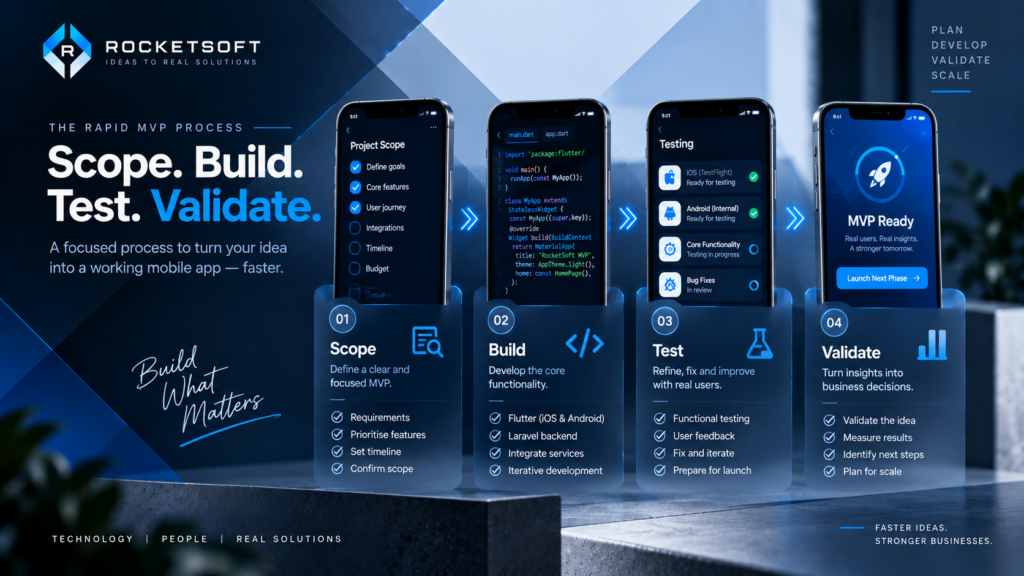
A prototype demonstrates screens and a user journey; it may not connect to real business systems. An MVP provides a limited working experience to test a defined idea. A production release must meet the agreed operational, security, support and distribution requirements for its intended users. The phases below can overlap and repeat. Their duration must be estimated for your particular mobile app development project, rather than added together from a generic timetable.
- Planning and Research
- User and business research: define the problem, the intended users and what would make the first release useful. Agree what you need to learn from a pilot.
- Project scoping: document included features, exclusions, user roles, integrations and acceptance criteria. Keep a separate list of later enhancements.
- Budget and schedule: identify supplier dependencies, available team capacity and client approvals. Distinguish elapsed calendar time from development effort.
- Design and Prototyping
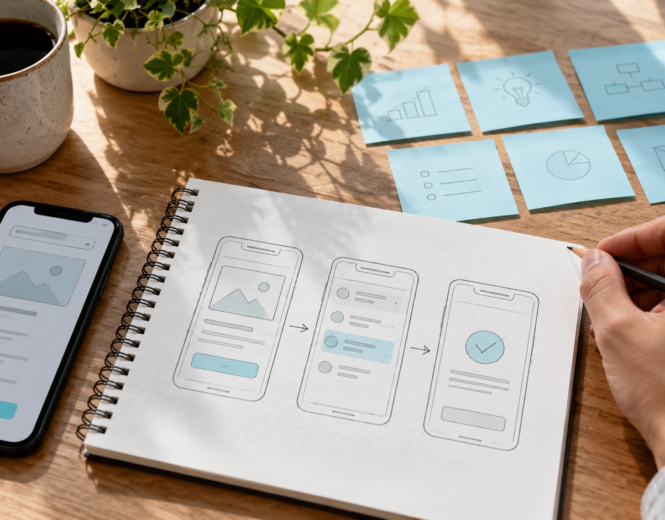
- Wireframing: map the main screens, user journeys and exception states before adding visual detail.
- UI and UX design: agree how users complete the core task, including errors, permissions and accessibility considerations.
- Prototype review: use a clickable model to test the proposed journey. Approval of a prototype does not mean the working app has been built.
- Development
- App development: implement the agreed interface and behaviour for the chosen platforms. Platform-specific requirements still need attention when code is shared.
- Backend development: build or connect the server-side services, database and permissions needed by the app. Establish who owns changes to existing systems.
- Integration: connect the app to documented services and test real responses, failures and access restrictions. Missing API access can delay progress independently of app coding.
- Testing
- Quality assurance: test core journeys, permissions, device compatibility and agreed performance requirements. Plan this throughout development rather than only at the end.
- User acceptance testing: have the nominated client users check the release against agreed criteria and record reproducible issues.
- Release preparation: prioritise defects, retest fixes and confirm the release meets its intended use. A limited pilot may have different acceptance criteria from a public launch.
- Launch and Post-Launch
- Distribution: prepare the appropriate internal testing or app-store release route, account access and submission information. Store submission and approval are separate milestones.
- Launch coordination: agree who supplies store content, communicates with users and supports the release. Marketing activity should be scheduled against the intended release milestone.
- Post-launch support: define monitoring, issue handling and maintenance responsibilities. Quote new features separately where they fall outside the support scope.
Factors Influencing Development Time
- Feature depth and user roles: a single workflow for one audience differs from a product with customer, driver, supplier and administrator interfaces. “Simple” needs a written definition.
- Platform and device requirements: iOS, Android and shared-code approaches have different implementation and testing considerations. See our native versus cross-platform guide when comparing options.
- Dependencies and team availability: more developers do not remove every bottleneck. Unavailable APIs, unclear requirements or a delayed approval can hold up work across the team.
- Client readiness and scope changes: nominate a decision-maker, prepare content and provide access through an agreed secure process. New features should trigger a review of both cost and timing.
Planning an App Launch in South Africa
In South Africa, plan testing around the devices, connectivity and usage conditions your audience actually has. An office-based staff app and a driver app used during deliveries may need different testing. A deadline should specify the milestone: a prototype review, internal pilot, app-store submission or public release. Those are separate events. Leave room for user feedback and external dependencies rather than treating the last day of coding as launch day.

How RocketSoft Approaches App Timelines
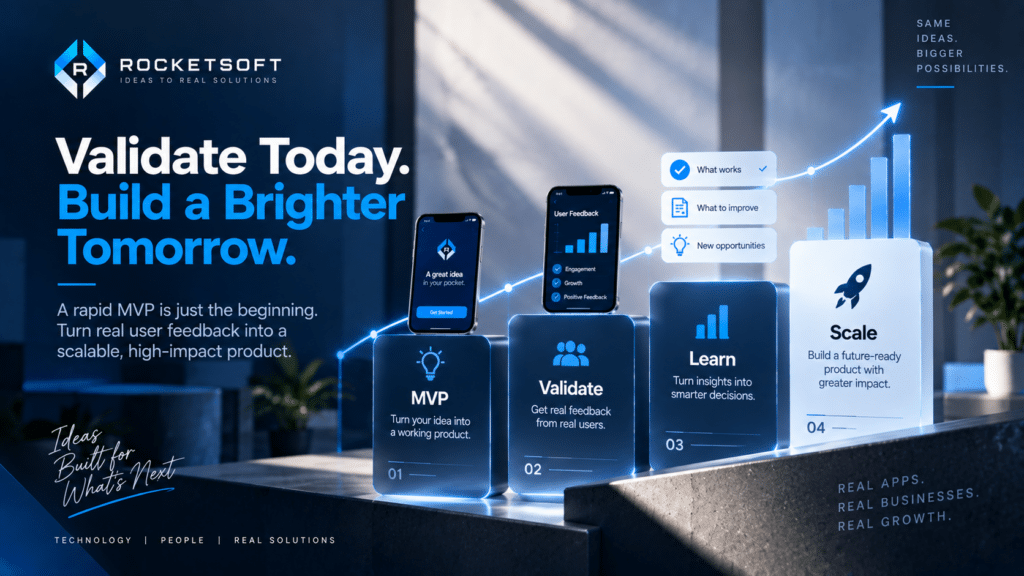
RocketSoft’s rapid MVP model is designed around a tightly controlled first release, with a clear decision-maker, prepared content and access to required services. Read the full three-to-four-week app guide for its scope and exclusions. More user roles, complex offline behaviour, undocumented integrations or production requirements need their own estimate. The historical award graphics below relate to 2023; they are not a guarantee of a particular delivery date.


Project dependencies are easier to understand through a concrete example. RocketSoft’s GoReefers Flutter driver app connects to an existing backend maintained by the client’s team. That means app development and backend coordination are distinct responsibilities. For any similar project, access, test data and agreement about API behaviour need to be available when the work requires them. The example illustrates a planning dependency, not a published timeline for that project.
What to Confirm Before Agreeing a Deadline
Before comparing proposals, check that each quote covers the same release: user roles, platforms, integrations, testing, deployment and support. Request milestones with acceptance criteria, identify who approves them and agree how scope changes affect the schedule. Our software scoping guide explains how those decisions are documented. A shorter estimate is only useful if it includes the work your business actually needs.
Need a realistic timeline for your app? Contact RocketSoft with your priority user journey, target platforms, existing systems and the reason for your preferred launch date. We can discuss what belongs in the first release and which assumptions need to be resolved before committing to a schedule.