Aug 12, 2021
 Mobile Development | South Africa

Choose an app development company by checking how well its experience, proposed scope, delivery process and support arrangements fit your business. A useful proposal explains what you will receive, who will build it, how changes are handled and what happens after launch. Compare those details before deciding on price.
If you are looking for app developers in Cape Town, start with the business problem you want to solve. A customer booking app, an internal field-service tool and a marketplace have different requirements. The right developer should help you identify those differences before committing to a budget or launch date.
Last updated: 6 October 2026.
What should you prepare before contacting an app developer?
Prepare a short brief that someone outside your business can understand. You do not need a complete technical specification for the first discussion, but you should be able to describe the users, their current problem and what a successful first version would do.
- The main users: customers, employees, drivers, suppliers or administrators.
- One important journey, such as making a booking, completing a job or submitting an order.
- The systems the app must connect to, and who can provide access to them.
- Whether you need Android, iOS, a web portal or several interfaces.
- Your available budget, preferred launch date and any fixed operational deadlines.
- What your team can provide, including branding, content, feedback and an internal decision maker.
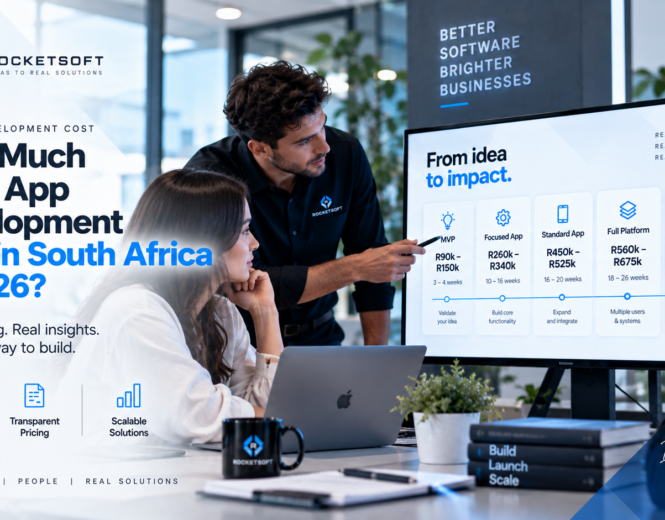
For help preparing the commercial side of the brief, read RocketSoft’s app development cost guide for South Africa. Its ranges describe RocketSoft’s own scoping model, with VAT and exclusions stated; they are not market-wide averages.
1. Ask for relevant work and an explanation of the developer’s role
A portfolio is more useful when the developer explains what it actually delivered. Ask which parts of the product the team designed and built, which systems were supplied by the client, and whether the app is still maintained. A familiar logo alone does not answer those questions.
RocketSoft’s Medchat project uses Flutter and a Laravel backend, with a mobile interface and administration functionality. The Rain iOS project uses Swift for an iOS application. These examples show different delivery requirements; they do not mean every new product should use the same technology or follow the same timeline.
Ask to see a relevant workflow or demonstration, then discuss how it compares with your requirements. If results such as time savings or sales growth are quoted, ask how they were measured.
2. Understand how the project will be scoped and priced
An estimate based on a few sentences can help establish affordability, but it leaves many decisions open. Before appointing a developer, request a documented scope covering features, user roles, interfaces, integrations, testing, deployment and exclusions.
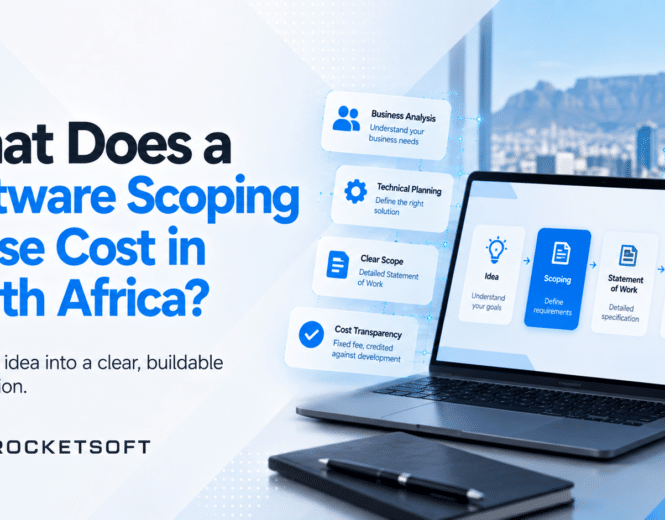
RocketSoft’s software scoping phase currently costs R10,000 excluding VAT. It produces a Statement of Work, which belongs to the client. The fee is credited against the build if the client proceeds with RocketSoft. These are RocketSoft’s published terms and should be confirmed before appointment.
Compare quotations against the same requirements. Establish whether the price is fixed, based on estimated hours, or divided into agreed phases. Ask what triggers a revised estimate, how extra work is approved and whether third-party subscriptions are included.
3. Check who will do the work and how you will communicate
Identify your day-to-day contact and the people responsible for design, development, testing and delivery. Ask how subcontracted work is managed if it forms part of the proposed team.
Agree how often you will see progress, how feedback is recorded and who can approve decisions. Regular demonstrations of working journeys are easier to assess than a percentage-complete update without a usable product.
Your own responsibilities matter too. Missing content, delayed approvals or unavailable integration credentials can hold up development even when the engineering work is ready to continue.
4. Ask what the delivery date actually includes
A prototype, an internal pilot and a public app-store release are different milestones. A promised completion date should identify which one you are buying, what acceptance testing is included and which dependencies must be ready.
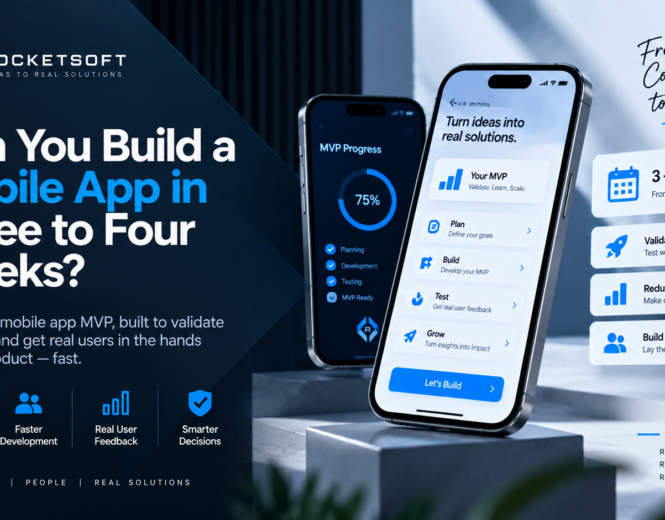
RocketSoft’s three-to-four-week rapid MVP approach applies to a deliberately narrow validation build. It is not a blanket promise for a full production app. Ask your developer to explain the difference between development time, client testing and release preparation.
5. Establish ownership, access and handover
Before signing, confirm the agreed terms for source code, design files, documentation, developer accounts, hosting and third-party licences. Ask who will have administrator access and how the project can be handed over if the working relationship changes.
- Where will the source repository be held, and who can access it?
- Who owns the app-store and infrastructure accounts?
- Which components are custom work and which rely on licensed third-party software?
- What documentation and deployment instructions are included?
- What assistance is included in a future handover?
These details should appear in the agreement. Avoid relying on assumptions that every supplier handles ownership or account access in the same way.
6. Discuss maintenance before launch
Ask which defects are covered after delivery, how long that cover lasts, and what counts as a new feature. Establish the support hours, reporting process, response expectations and separate recurring charges.
Explore RocketSoft’s app maintenance and support service if the project needs an ongoing arrangement. The plan should identify the mobile app, backend, integrations and infrastructure responsibilities, especially when several suppliers are involved.
A practical checklist for choosing an app development company
| Decision | What a useful answer includes |
|---|---|
| Relevant experience | Comparable workflows and a clear explanation of the team’s role. |
| Scope and price | Included features, assumptions, exclusions, VAT and change approval. |
| Delivery | Named milestones, client responsibilities and acceptance criteria. |
| Technology | A reasoned recommendation tied to platforms, integrations and support. |
| Ownership | Written terms for code, accounts, licences and handover. |
| Support | A clear distinction between defects, maintenance and future development. |
Frequently asked questions
Should I choose the cheapest app developer?
Choose on the complete agreed scope and the supplier’s ability to deliver it. A lower price may reflect fewer features or a narrower release. Ask the supplier to explain the difference before treating competing quotations as equivalent.
Does the developer need to be based in Cape Town?
Local access can make workshops and collaboration convenient, but it is one part of the decision. Communication, relevant experience, availability and a clear delivery process also matter. RocketSoft is based in Cape Town and works with businesses across South Africa and internationally.
Should I get a detailed quote before deciding on the technology?
Discuss the platform options early, then document the recommendation during scoping. The choice affects development and support, but a preferred framework should not replace a clear understanding of the product.
Discuss your app project with RocketSoft
RocketSoft provides custom mobile app development for businesses that need a defined product and delivery plan. Contact the team with your main user journey, required integrations, budget range and preferred launch date to discuss the next step.